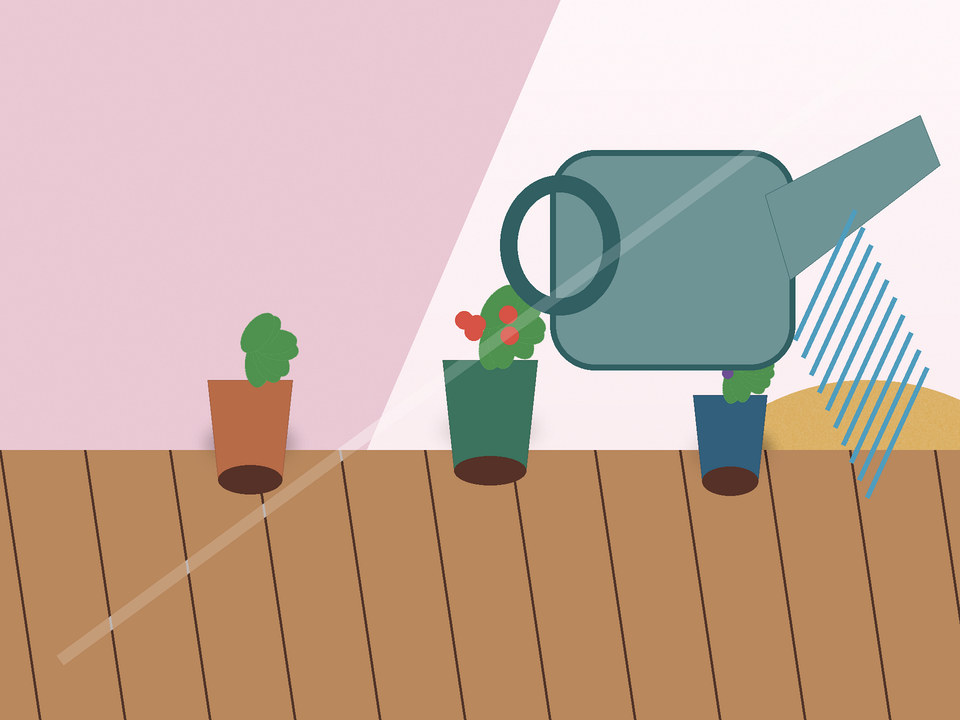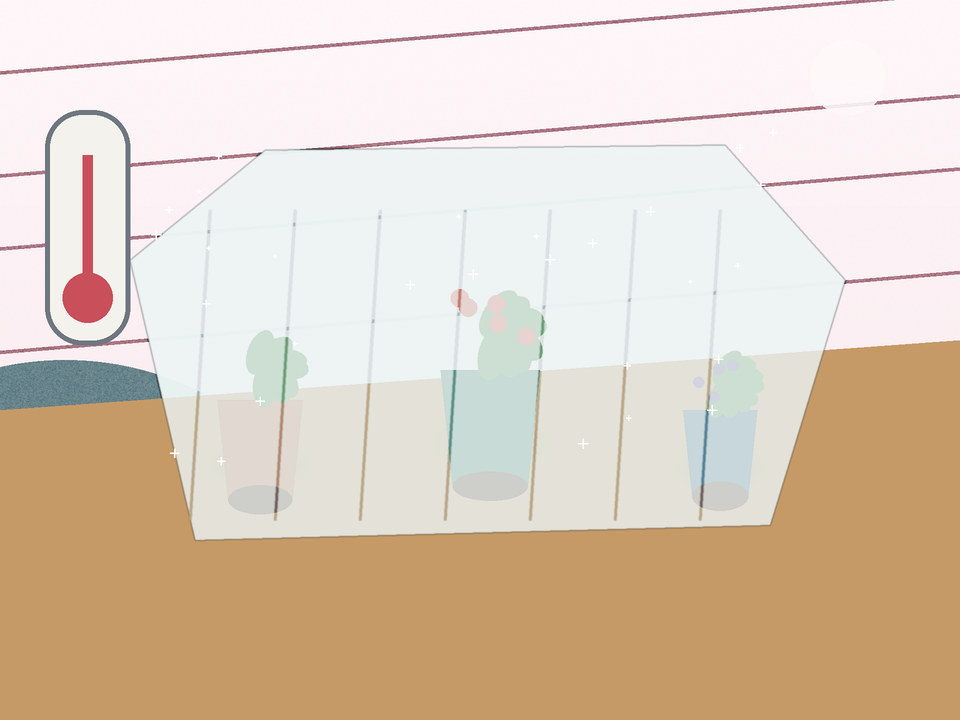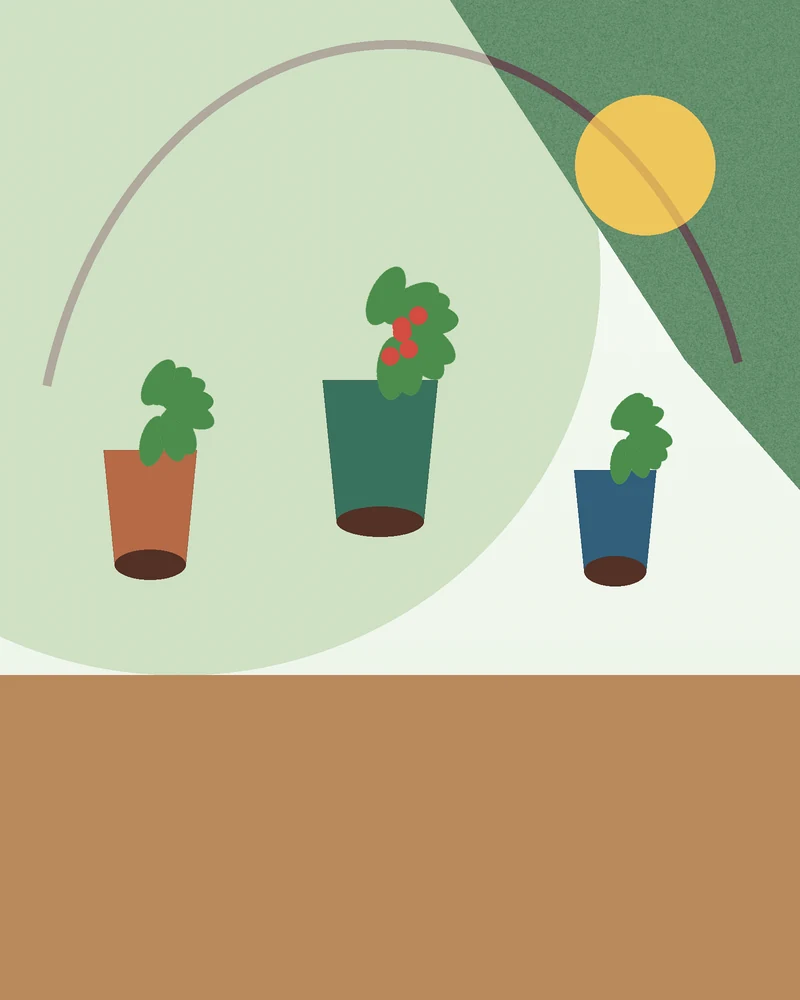
Lettuce, Swiss chard commonly called spinach in South Africa, radishes, spring onions and familiar kitchen herbs are an easy start. The ARC winter-vegetable guide and summer-vegetable production guide provide South African planting windows. Use Potchefstroom frost as a local foundation, and move to cherry tomatoes, bush beans, basil and peppers only when your own microclimate is warm enough. The complete VLU container-garden guide explains how sunlight, growing mix and drainage work together.
Choose for the season first
- Cooler months: lettuce, chard, radishes, parsley and spring onions.
- Warm months after frost: cherry tomatoes, peppers, basil and compact bush beans.
- Year-round in a sheltered place: rosemary, thyme, oregano and mint in its own pot.
Match the container to the plant
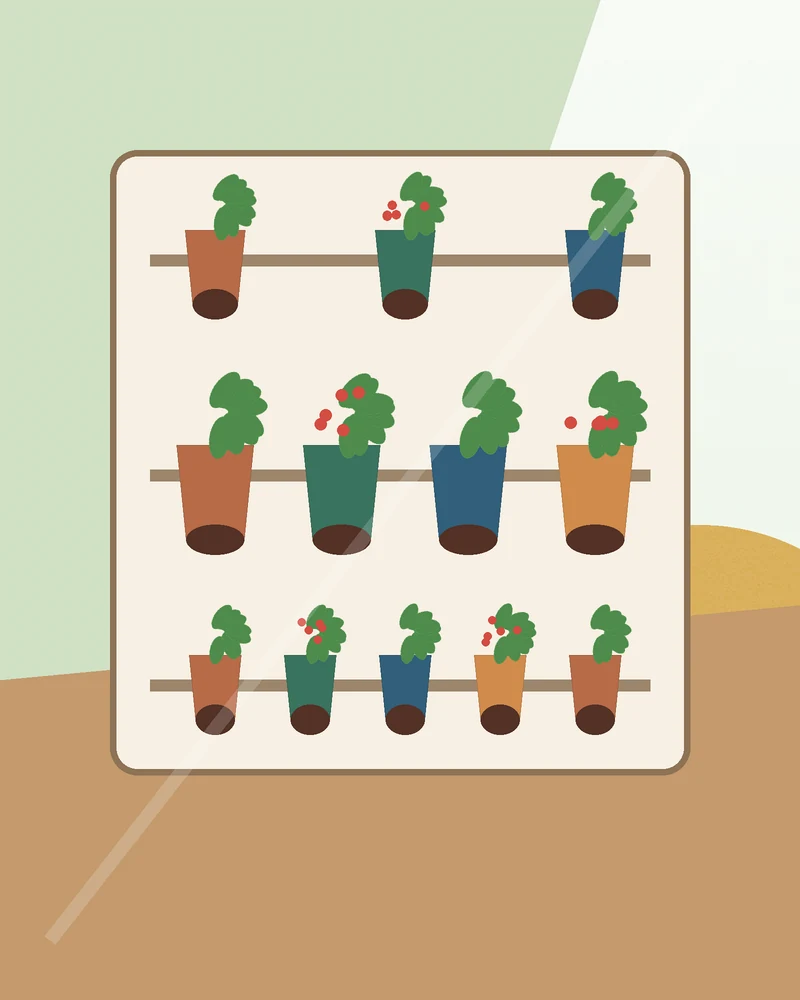
Herbs and leafy vegetables can grow in a container about 20–30 cm deep. Give a tomato or pepper its own pot at least 40–45 cm deep and wide, with a firm support. One healthy plant in enough growing mix usually produces better than several crowded plants.
A simple first combination
- One large container with a supported cherry tomato.
- One broad container with lettuce or chard.
- One smaller pot with parsley, thyme or basil for the season.
- Drainage holes and a position with enough morning or afternoon sun.
Use cherry tomatoes, herbs or leaves in the South African farm-style vegetable flatbread. This turns a small harvest into a family meal.
Frequently asked questions
Can I mix different vegetables in one container?
Yes, when they have similar light and water needs. Lettuce and spring onions work together; do not fill a tomato’s root space with many other plants.
Why does the best planting time vary across North West and the Highveld?
The North West Biodiversity Sector Plan shows rainfall variation across the province, while the NWU Potchefstroom climate profile provides a local Highveld foundation of dry winters, frost and summer thunderstorms. Adapt the planting window to your own cold, rainfall and shelter.