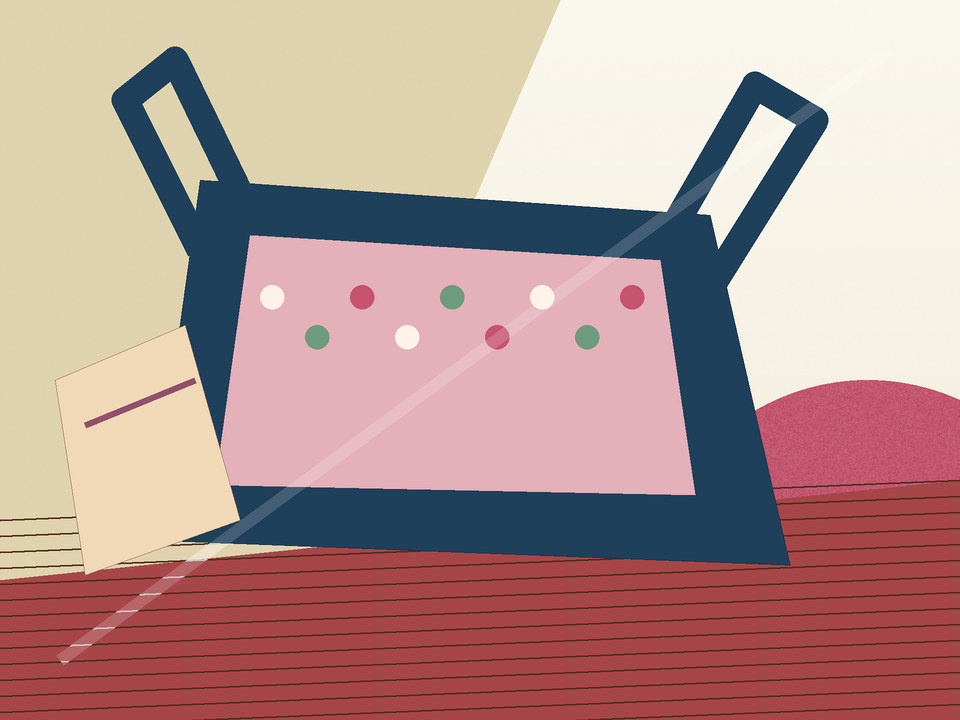
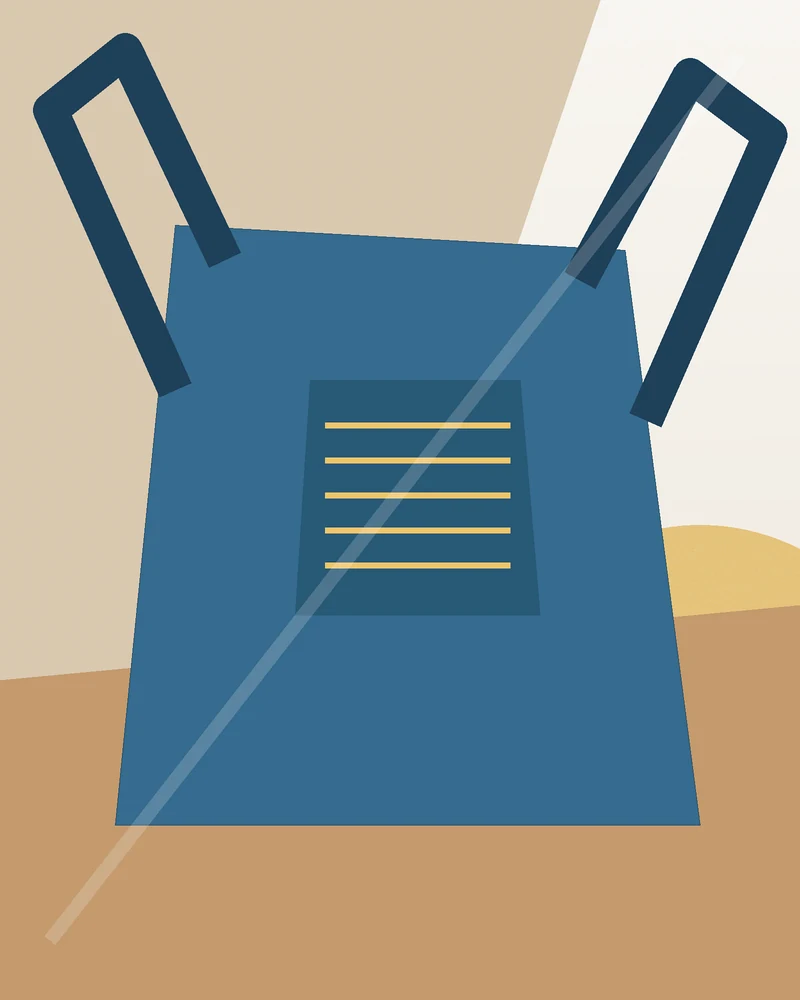
Handles carry the full weight of a bag. In the VLU denim tote-bag pattern two strips measuring 10 × 65 cm are folded, stitched and placed with their ends 10 cm from each side edge. Measure both sides from the same reference point so the bag hangs straight.
Build strength in layers
- Fold the raw long edges of each strip inward and stitch along both long sides.
- Baste the ends to the right side of the outer bag first and check that nothing is twisted.
- Sew the upper bag edge, then add box-and-cross stitching at every handle end.
- Sew one or two rows of topstitching around the top to stabilise the lining and handles together.
Cross a thick seam without a jump
When the presser foot climbs a thick junction, stitches may become tiny or pile up in one place. Stop with the needle down, raise the foot and place a folded offcut behind it to keep it level. Turn the handwheel over the highest section and continue slowly.
Strength check
- Both handles are the same length and are not twisted.
- Every end sits 10 cm from the nearest side edge.
- The stitching catches the full width of the folded strip.
- Loose thread ends are secured and the upper edge lies flat.
Frequently asked questions
Do I need a special tool for thick seams?
No. A small folded denim offcut can temporarily keep the presser foot level. A hump-jumper tool is convenient, but not essential.
Can an old pair of jeans provide the handles?
Yes, provided the chosen section is strong, evenly thick and free of worn patches. Test the length and remove hard metal parts before sewing.