Complete preparation guide
Choose text size
Change the article text to large, larger or largest.
01
Competition requirements
- The entry may not be older than two years.
- The completed figure or animal must measure at least 20 cm and no more than 40 cm.
- It must be a three-dimensional crocheted toy in which the amigurumi technique is clearly evident.
- Removable clothing may be added.
- The label from the yarn used and a small yarn sample must be attached to the entry.
02
Yarn, tension and shape
Choose a crochet hook that produces dense, firm stitches so the stuffing is not visible. Four-ply cotton or a cotton-acrylic blend of approximately 60% to 40% works especially well. Very thick yarn can obscure small details and a clear shape. Fluffy or feathered yarn may be used as part of the design.
Bright, cheerful colours are appropriate, but the colour choice should still support the intended animal or figure. Use a stitch marker and count regularly to maintain symmetry.
03
Assembly and details
- Stuff each part gradually with light, washable filling.
- The toy must be firm but evenly filled, without lumps or protruding stuffing.
- Pin arms, legs, ears and other parts in position before sewing them on.
- Embellishments must add character while remaining neat and durable.
- Embroidered eyes, glass eyes, firm whiskers, fluffy tails and similar details may be used, provided everything is attached very securely.
- Avoid bulky seams, loose loops and visible thread ends.
04
Practical working sequence
- Choose the character, pattern, final size and colour plan.
- Make a tension sample with the actual yarn and crochet hook.
- Crochet the main parts in the round and count every row carefully.
- Stuff gradually before the openings become too small.
- Assemble the parts symmetrically and sew them on invisibly.
- Add facial features and embellishments last.
- Perform a final pull test on every attached component.
05
What the judging focuses on
Appearance counts 50% and workmanship 50%. Important qualities are character, proportion, colour, even stitches, firm tension, smooth stuffing, symmetrical assembly and a clean finish.
06
Presentation
Place the toy in a transparent plastic bag and label it CROCHET, followed by the entrant’s name, branch, region and province. Attach the yarn label and yarn sample to the entry. Attach the judging card with crochet thread. Do not use a safety pin.
07
Final checklist
- 20–40 cm in size
- Not older than two years
- Three-dimensional and crocheted mainly in the round
- Evenly and firmly stuffed
- All details attached securely
- Yarn label and sample attached
- Correctly packed and labelled
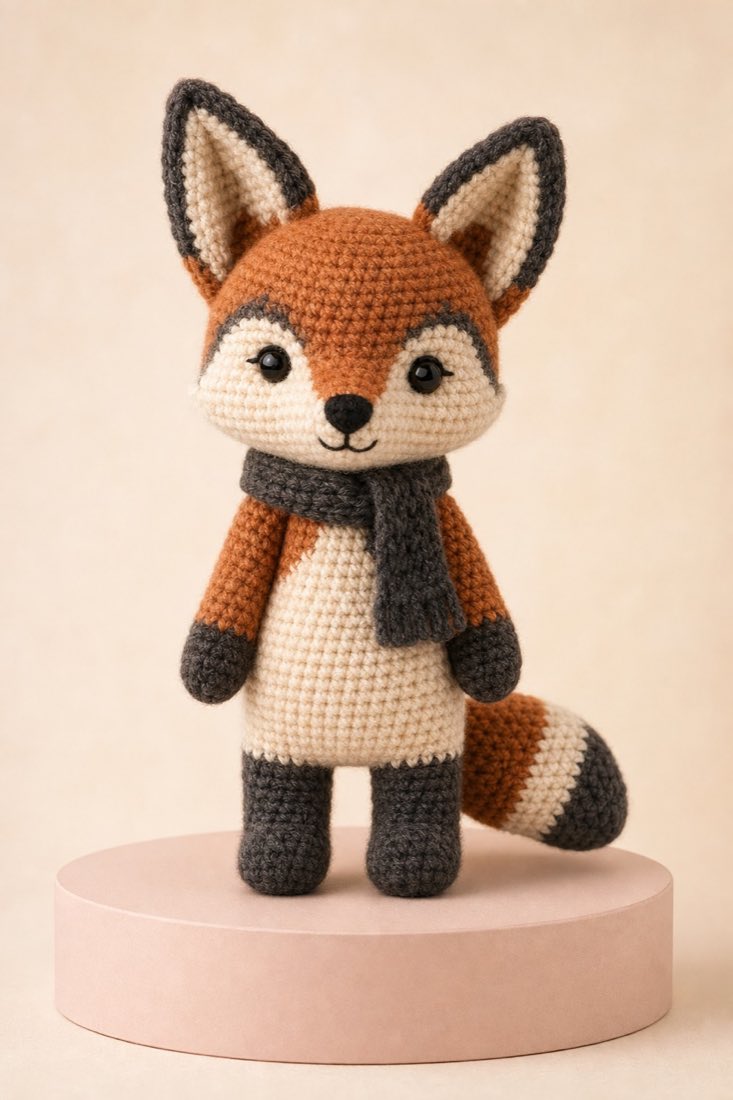
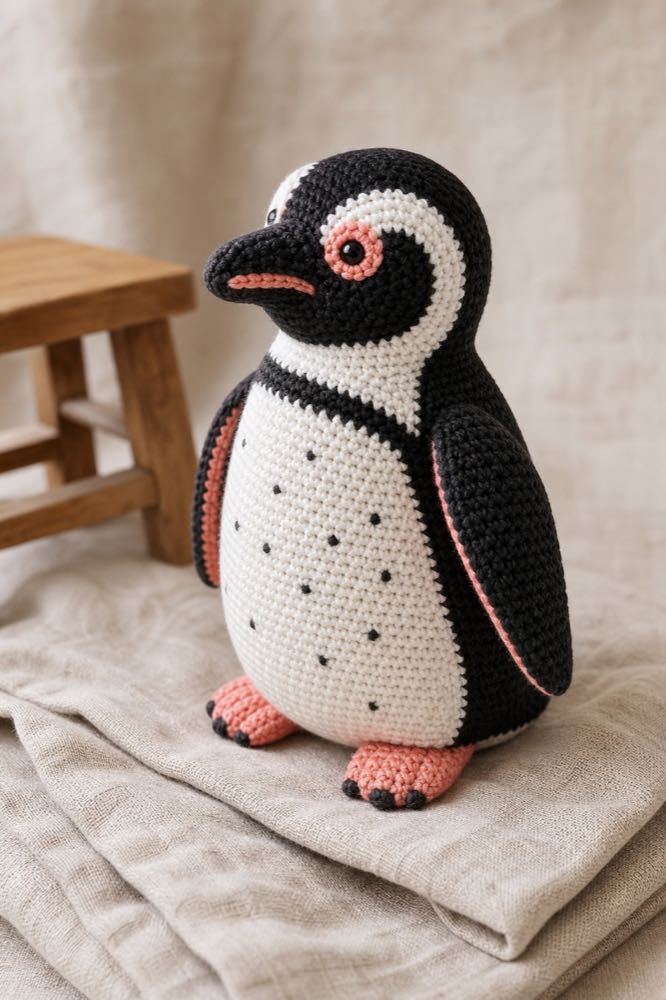
Two portrait-format examples
Crochet
Use these original examples as inspiration for layout, colour and presentation—not as patterns to copy exactly.