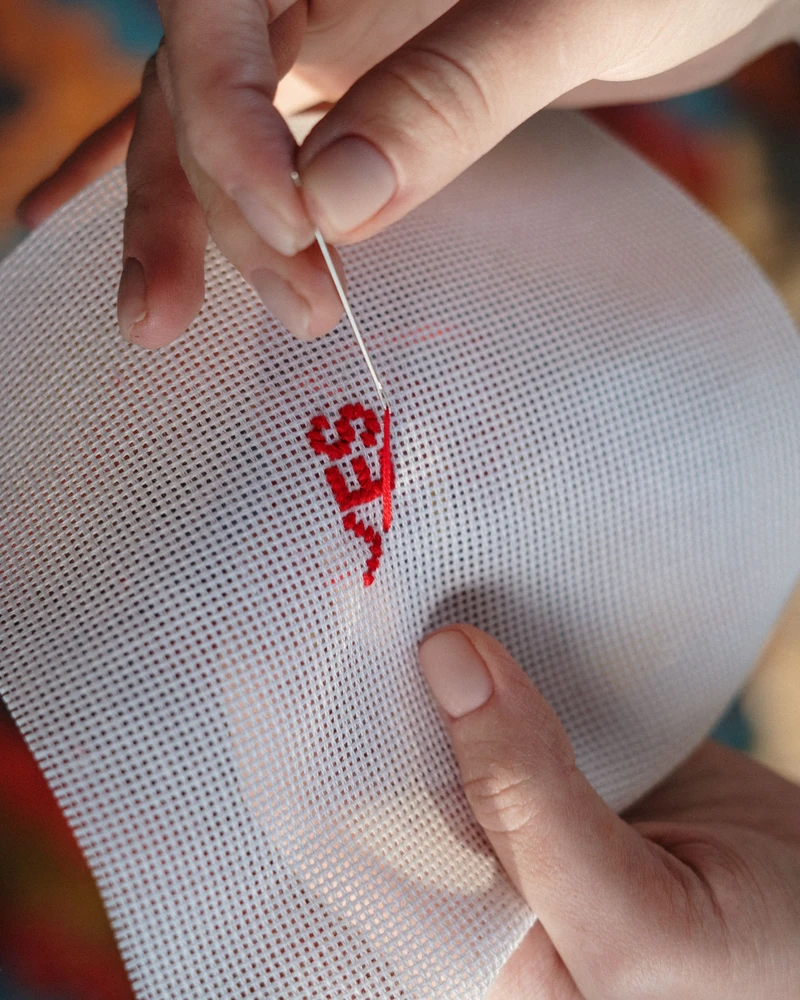
Puckering usually begins when thread is pulled too tightly or a fabric scrap is attached at only a few points. On the slow-stitch jacket the decoration must move with the garment without drawing the base cloth inward.
Work flat, short and regularly
- Support the jacket on a table or cushion; do not let the needle hand carry the full weight.
- Pull each stitch only until the thread touches the surface. When the cloth wrinkles around it, loosen the last stitch.
- Secure raw appliqué edges with small running or overcast stitches at regular intervals, especially at corners and leaf tips.
- Use short thread lengths so that they twist and knot less.
Make the reverse comfortable to wear
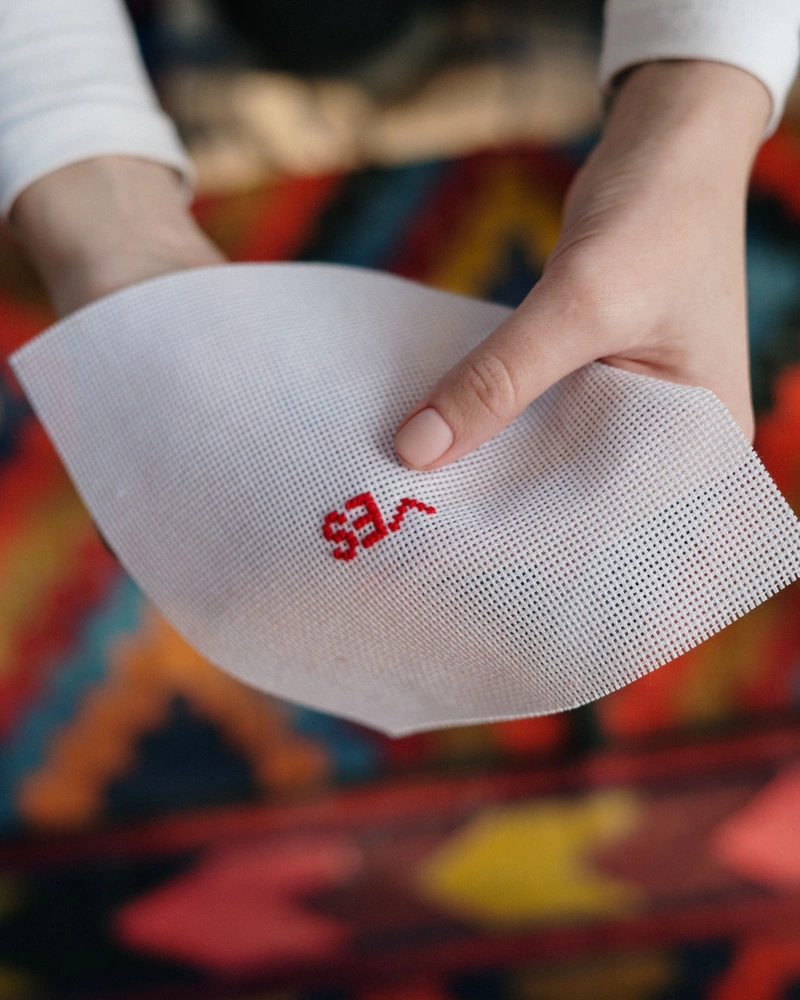
Weave thread ends beneath three or four existing stitches and trim them short. Cover a rough reverse with soft cotton when it may rub against the skin. The South African repair guide from Twyg describes visible mending as a way to keep wearing a garment for longer; a neat, strong finish therefore matters as much as the decoration.
Final check
- The base fabric lies flat when the jacket rests on a table.
- No appliqué edge lifts easily with a fingernail.
- Thread ends are short and secured.
- The motif does not rub against skin or lining.
Frequently asked questions
What should I do when a fabric edge frays?
Trim only loose fibres and work a second row of small stitches closer to the edge. Do not pull long fibres.
How should I wash the finished jacket?
Follow the original care label, use a laundry bag and choose a gentle cycle or hand wash when the motif is delicate.