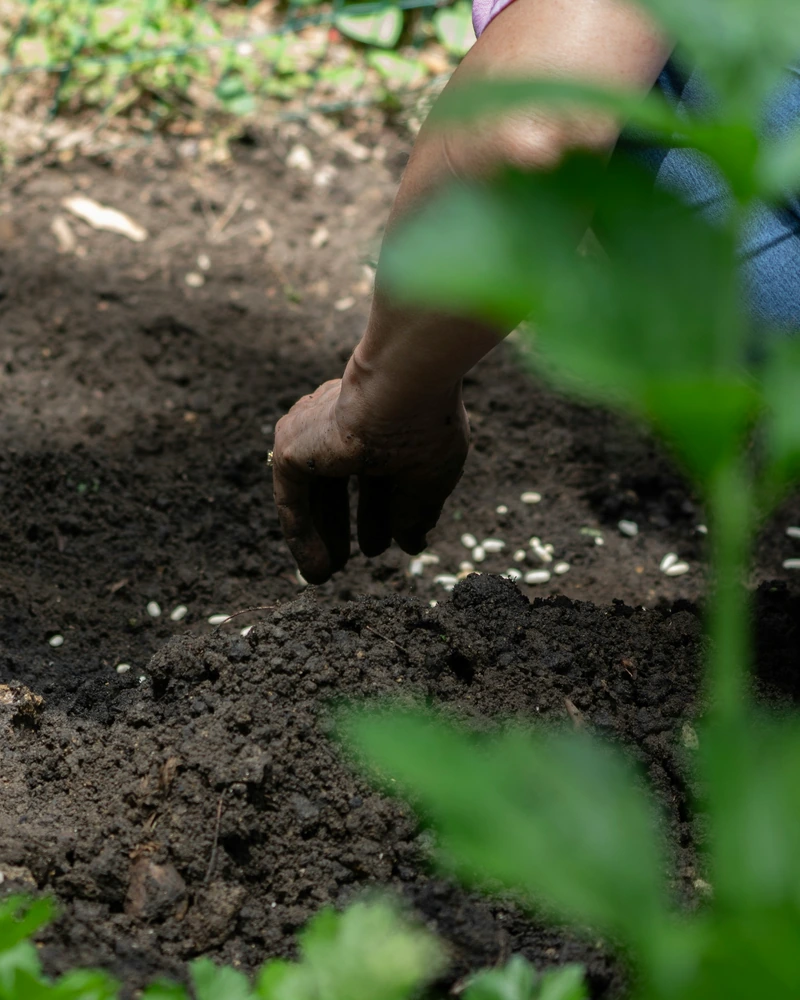
After a cold, dry winter, a bed may be hard and repel water. The North West Biodiversity Sector Plan shows that rainfall varies materially across the province, while the NWU Potchefstroom climate profile describes local summer thunderstorms. Prepare for infiltration and your own rainfall pattern, and use the existing winter garden guide for the wider seasonal clean-up.
Four steps before the rain
Work with the soil, not against it
- Remove seed heads, deep-rooted weeds and diseased plant remains.
- Water the bed slowly and deeply a day beforehand if it is rock hard.
- Loosen the top layer with a fork and work in mature compost without pulverising the soil.
- Cover bare ground with a thin mulch layer, keeping it away from young stems.
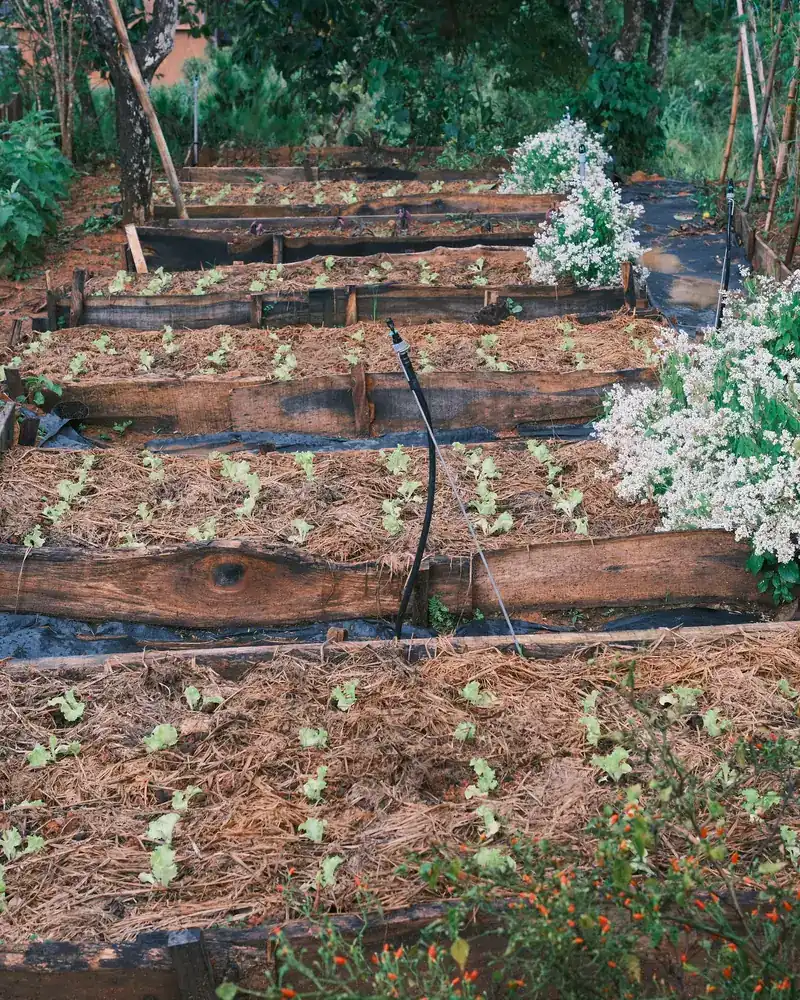
What to check after the first shower
- Look for standing water; those areas need drainage or a shallow channel.
- Scratch beneath the mulch to see whether moisture reached the root zone.
- Top up settled compost and sow only when the bed is moist but not sodden.
Frequently asked questions
How much compost is enough?
Use a modest, even layer of mature compost and mix it through the upper planting layer. More is not always better, especially for fine root-crop seed.
Should I still water after rain?
Check the soil below the surface first. A brief shower can darken the top while the root zone remains dry.