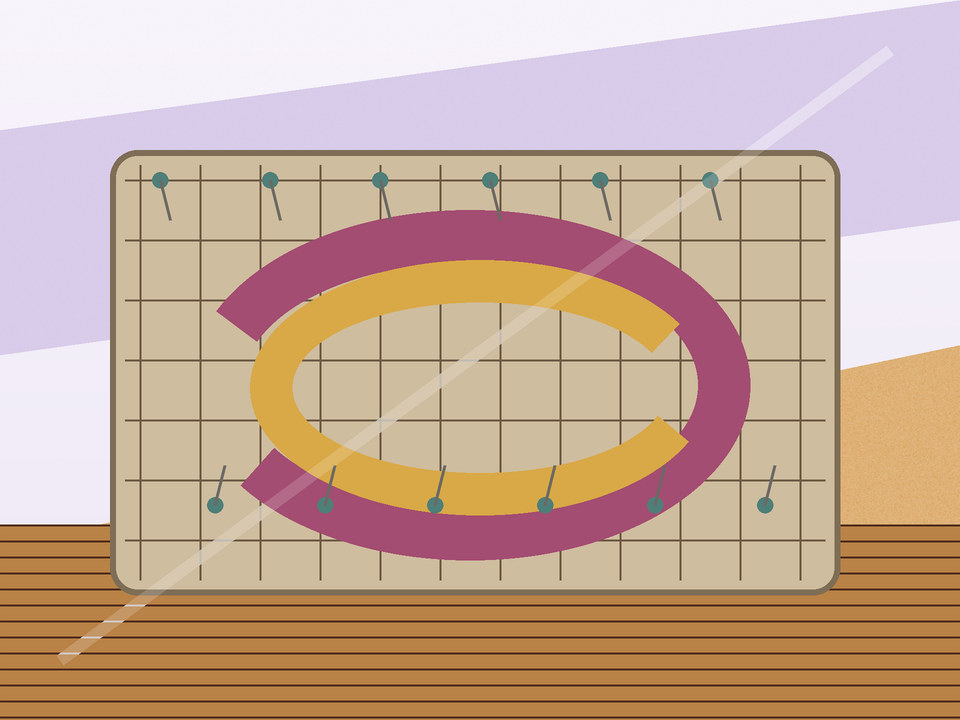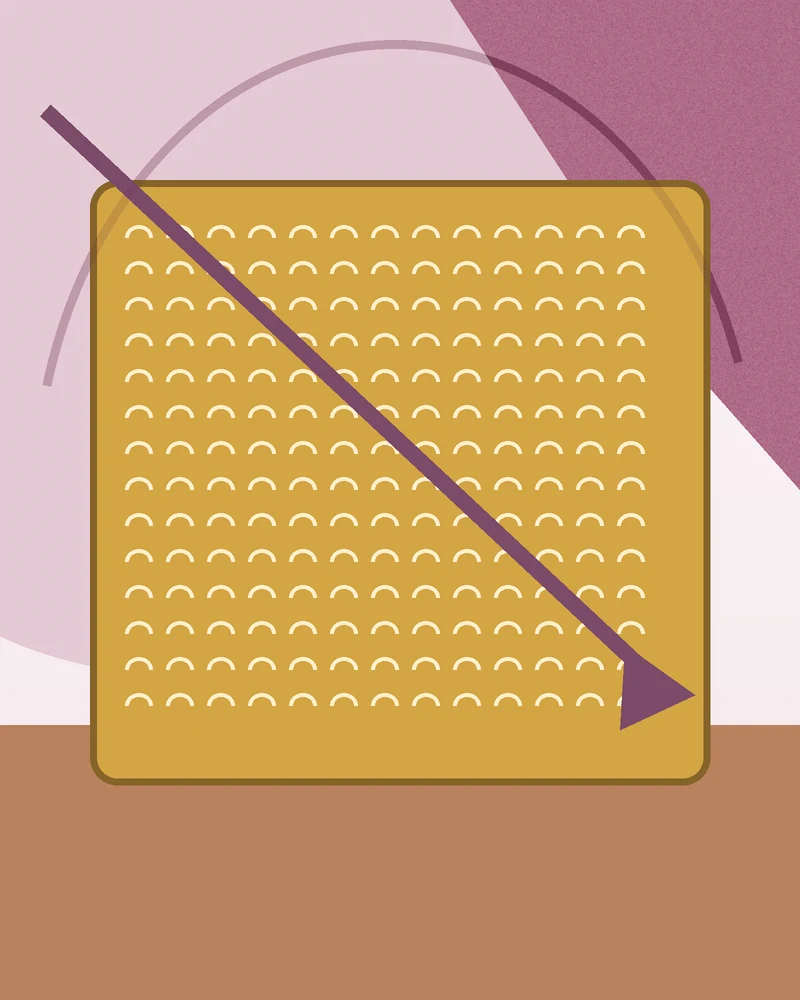
Think of one row as an outward and return journey. During the forward pass you pick up loops; during the return pass you work them off again. The front remains facing you. Watch the short video in the complete Tunisian crochet article when you want to follow the movement together with the description.
1. The forward pass: pick up loops
- Begin with the one loop already on the hook.
- Insert the hook from right to left behind the next vertical bar.
- Yarn over, pull up a new loop and leave it on the hook.
- Repeat to the final stitch and count the loops before returning.
2. The return pass: work loops off
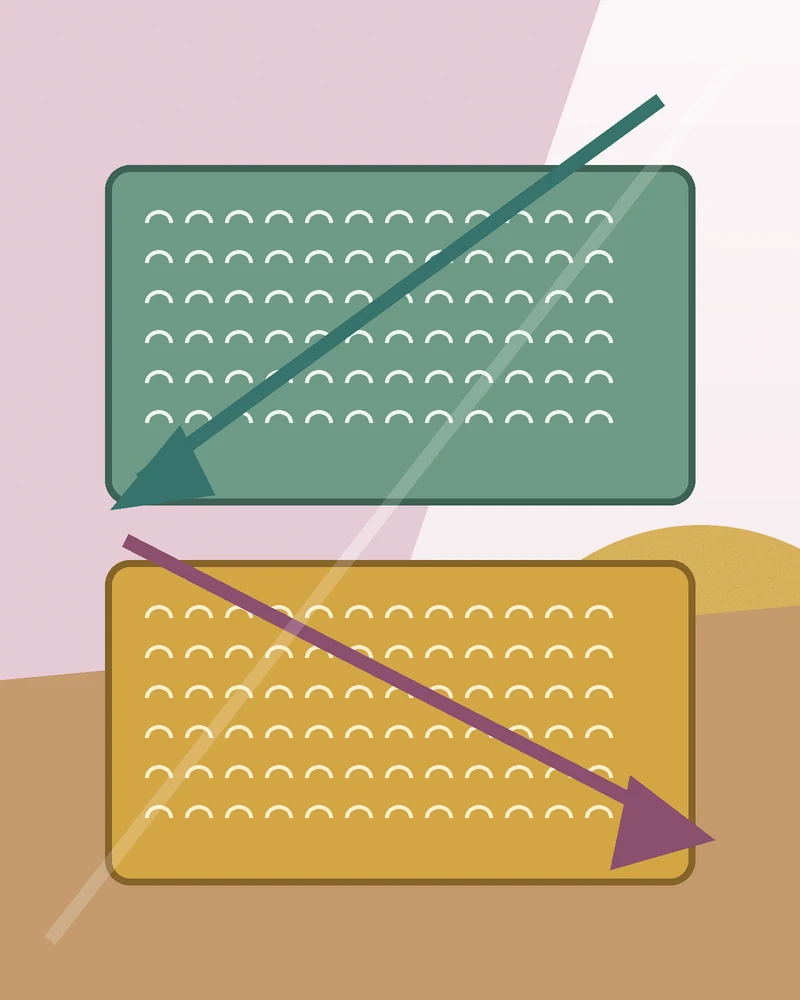
Yarn over and pull through only one loop first. This forms the edge chain. Then yarn over and pull through two loops repeatedly until only one loop remains on the hook. That remaining loop is already the first loop of the next forward pass.
Check every row
- The work has not been turned.
- The forward pass has the same number of loops as the previous row.
- The first return pull goes through one loop; the rest go through two.
- Only one loop remains when the return pass is complete.
Frequently asked questions
Why does one loop remain?
The final loop of the return pass becomes the first loop of the next forward pass. You therefore do not make a new loop at the beginning of every row.
How do I know my count is correct?
Count the loops at the end of every forward pass and compare them with the original chain count. A stitch marker at the final edge can help.