Complete preparation guide
Choose text size
Change the article text to large, larger or largest.
01
Competition requirements
- The book is intended for a child of approximately three to five years.
- The entry may not be older than two years.
- The recommended size is approximately 250 x 250 mm and it may not be smaller than A5, approximately 148 x 210 mm.
- The pages must be durable, firm, washable and easy to turn.
- Felt is a popular choice for loose elements, but other suitable materials may be used.
- The book must contain interactive parts.
- At least five pages are required, including the decorated front cover.
02
Planning the pages
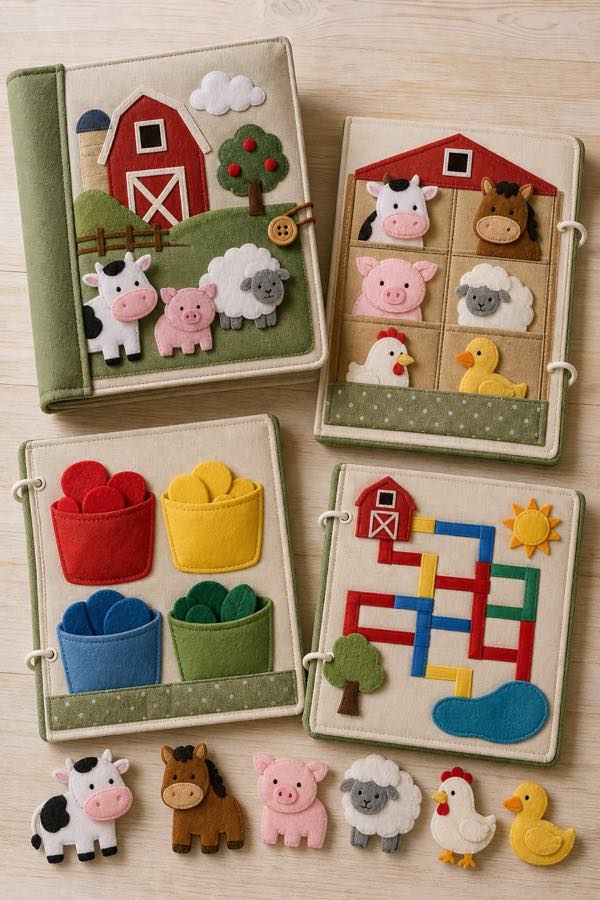
Choose a simple theme that runs through the whole book, such as farm animals, colours, shapes, garden life or a short story. Give each page a separate purpose: match shapes, count objects, thread a lace, open a zip, arrange colours or complete a simple picture.
03
Safety and durability
- Use large components that are easy to handle.
- Double loose elements when this provides greater firmness.
- Finish the edges by hand or machine to limit fraying.
- Large buttons must be sewn on very securely.
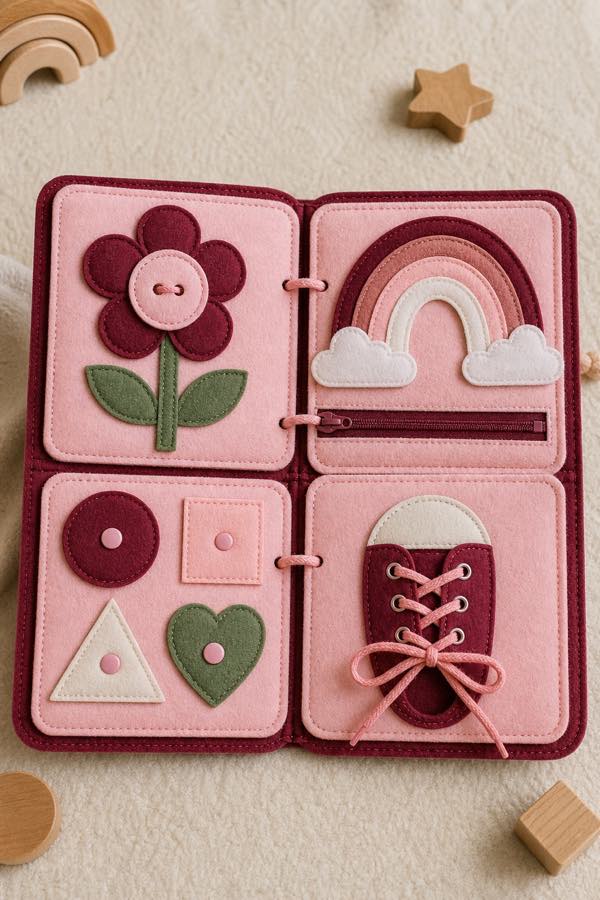
- Buttons, press studs, zips, hook-and-loop tape, buckles and shoelaces may be used as activities.
- No wire, sharp points or other dangerous objects are allowed.
- Remove glue threads and visible glue marks.
- Keep the layout simple; too many small details make the activity confusing.
04
Construction
Blanket stitch or a similar edge finish can strengthen the pages. Choose a binding method that allows the pages to open easily and withstand frequent use. Test every fastening and moving part repeatedly. Pay continuous attention to colour harmony, balance, proportion and a neat visual rhythm.
05
What the judging focuses on
Appearance counts 60% and workmanship 40%. The book must be attractive, age-appropriate, safe and functional. Neat stitching, strong attachments, clear learning value, good use of colour and easily handled pages are important.
06
Presentation
Place the book in a transparent plastic bag and label it HANDCRAFT, followed by the entrant’s name, branch, region and province. Attach the judging card to the book with crochet thread. Do not use a safety pin.
07
Final checklist
- For ages three to five
- Approximately 250 x 250 mm and not smaller than A5
- At least five pages, including the front cover
- Firm, washable and easy-to-turn pages
- Interactive, safe elements
- No sharp or loose dangerous parts
- Correctly packed and labelled
Two portrait-format examples
Handcraft
Use these original examples as inspiration for layout, colour and presentation—not as patterns to copy exactly.